When the classroom moves to Bangkok: An international intensive week offers new perspectives on nursing
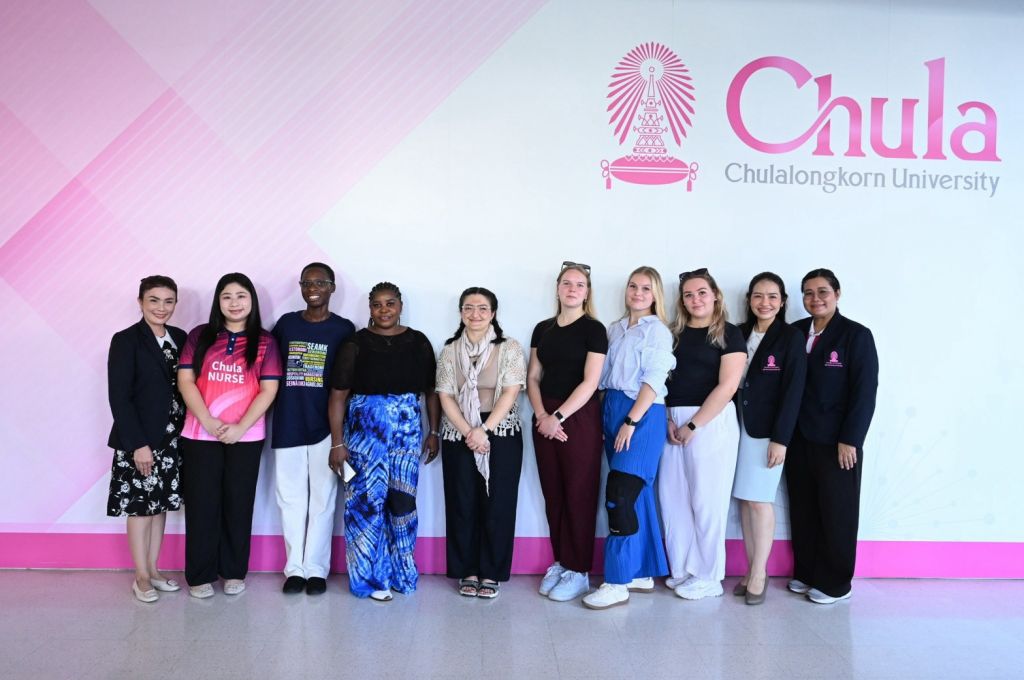
International study experiences offer students opportunities to visit new places and encounter different cultures. At their best, however, they offer much more: an opportunity to examine one’s own thinking, previous learning and future profession from a new perspective (Chwialkowska, 2020; Dogan et al., 2025). The DEqual – Equality in Diabetes Care project’s intensive week in Bangkok, Thailand, provided such an opportunity for nursing students from Seinäjoki University of Applied Sciences (SEAMK).
The DEqual project develops diabetes care and health literacy competence, particularly for challenging healthcare environments such as correctional settings. Through collaboration between SEAMK, Tampere University of Applied Sciences (TAMK) and Chulalongkorn University, the project also develops education on health literacy and diabetes care for current and future healthcare professionals.
Participation in the DEqual project extends beyond the international intensive weeks. The project involves co-designing the DEqualHL course, completing activities related to health literacy and diabetes care, and reflecting on experiences during and after the intensive weeks. Reflection after the week in Bangkok extended beyond identifying differences between healthcare practices in Thailand and Finland. The experiences raised broader questions about how culture, social circumstances and healthcare structures influence nursing practice, what respectful and equitable care means in different contexts, and how personal backgrounds and previous experiences shape perceptions of good care.
Experience becomes learning through reflection
An international intensive week provides a particularly rich environment for experiential learning. Instead of exploring nursing only through literature or classroom discussions, students encounter healthcare in authentic environments. Short-term international courses can complement nursing education by introducing students to topics and perspectives that may receive less attention in their regular curricula. Through varied learning activities and collaboration with students from different backgrounds, they also create opportunities for active engagement and shared learning. Cross-national collaboration between teachers is equally important in creating an environment that supports this learning process (Bjørnnes et al., 2024).
However, having an experience does not automatically mean learning from it. In experiential learning, reflection plays a significant role. Experiences are examined in relation to previous knowledge and can then contribute to new understanding that can be applied in future situations. Research suggests that experiential learning can support nursing students’ self-reflection and critical thinking (Cheng et al., 2020).
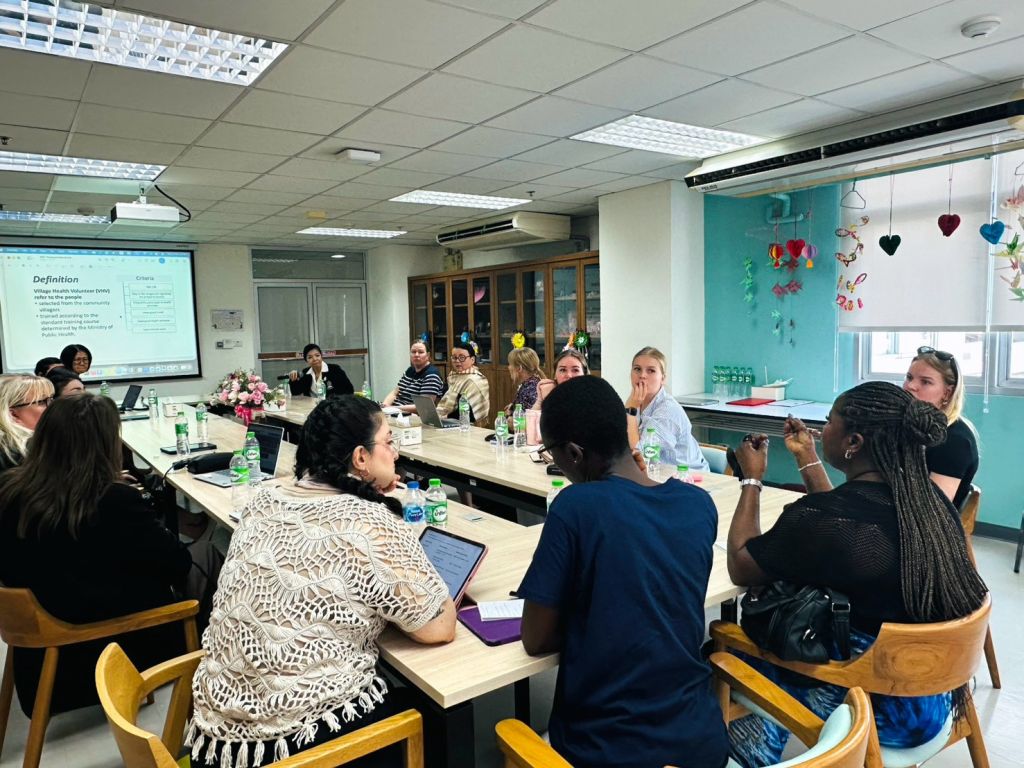
This became particularly relevant after the intensive week. During the programme, new experiences followed one another quickly: different healthcare environments, ways of working, people and perspectives were encountered throughout the week. Reflection afterwards provided an opportunity to slow down and consider why certain encounters had remained particularly meaningful and why some observations had challenged previous ways of thinking. In this sense, the intensive week provided more than academic knowledge. It created new perspectives and connections and offered an opportunity to consider the human side of nursing from a different point of view.
When our own assumptions are challenged
International learning also raises a more difficult question: how can an unfamiliar healthcare system and society be observed without automatically evaluating everything according to what is familiar from one’s own cultural background and healthcare system? This question became particularly important when reflecting on inequalities and living conditions observed during the week in Bangkok. One reflection described the challenge as trying not to view the experiences through “Western glasses”. At the same time, the experience raised awareness of the position of an outsider observing a complex society during a relatively short visit. Recognising this perspective is itself an important part of learning. An international experience is not only an opportunity to observe differences in another country. It can also make familiar assumptions more visible and encourage critical reflection on why certain practices are considered normal, appropriate or desirable. Previous research on nursing students’ international clinical placements indicates that encountering unfamiliar cultural environments and different ways of practising nursing can contribute to the development of cultural competence (Andreassen et al., 2025).
A short international programme can offer valuable opportunities for cultural learning, but it does not make anyone an expert in another culture. A more meaningful perspective may be cultural humility, originally introduced by Tervalon and Murray-García (1998). Cultural humility emphasises continuous learning, self-awareness and critical self-reflection as a lifelong process. Perhaps one of the most valuable questions arising from international learning is therefore not simply: How is nursing different here? Instead, the experience encourages another question: Why do we think about nursing in the way that we do, and what shapes our understanding of good care?
Students are not only recipients of knowledge
The DEqual intensive week was not limited to listening to experts or observing healthcare practices. During the week, students also had an opportunity to review local nursing curricula. The wider project also provides opportunities for students to participate in the development of the DEqualHL course together with the partner universities, which creates a different role for students. When educational content is examined together, observations are discussed with students and experts from different countries, and ideas are shared based on different educational and professional perspectives, learning becomes more than receiving information. Students can participate in creating and exchanging knowledge.
This can also strengthen an important professional realisation: knowledge and perspectives developed during nursing education can already have value beyond the classroom. International collaboration can create opportunities for reciprocal learning rather than simply transferring knowledge from one country or context to another. Different experiences, educational backgrounds and perspectives can be brought into a shared learning process, allowing knowledge and understanding to be developed together (Simms et al., 2026; Vian et al., 2025).
What can be brought home from Bangkok?
By the end of the intensive week, experiences had accumulated from very different healthcare and community environments. More importantly, the week raised questions about where nursing takes place, what influences people’s opportunities to care for their health, and how culture, social circumstances and healthcare structures shape health and access to care. One important realisation concerned the environments in which nursing and health promotion take place. Good nursing care cannot be limited to hospitals or other traditional healthcare settings. The week also reinforced a fundamental principle of nursing: every person deserves compassionate, respectful and equitable healthcare, regardless of background or circumstances.
These questions are relevant whether nursing takes place in Bangkok, Seinäjoki or elsewhere in the world. For this reason, the value of an international intensive week should perhaps not be measured only by how much was learned about Thailand. A more meaningful question is whether the experience provided new ways of seeing nursing, healthcare and previously held assumptions. International learning does not necessarily provide clear answers to every question encountered along the way. Instead, it may create new questions and encourage reflection that continues long after the actual journey has ended.
This article was prepared as part of the DEqual – Equality in Diabetes Care project, funded by Team Finland Knowledge (TFK). We gratefully acknowledge the funding supporting the project, international collaboration and student participation in the intensive week in Bangkok.
Beatrice Suomalainen
Nursing student
SEAMK
Dilrubai Siltamäki-Toclucu
Nursing student
SEAMK
Sarah Ekwiekwie
Nursing student
SEAMK
Pauliina Oja-Lipasti
Senior lecturer, project manager
SEAMK
Beatrice Suomalainen, Dilrubai Siltamäki-Toclucu and Sarah Ekwiekwie are nursing students at Seinäjoki University of Applied Sciences. They participated in the DEqual project and its international intensive week in Bangkok, contributing student perspectives on international learning, cultural humility and nursing education.
Pauliina Oja-Lipasti is a Senior Lecturer and Project Manager in the DEqual project at Seinäjoki University of Applied Sciences.
Sources
Andreassen, L., Steindal, S. A., Sarin, J., & Strøm, B. S. (2025). Undergraduate nursing students’ experiences during international clinical placement: A scoping review. International journal of nursing studies advances, 9, 100378. https://doi.org/10.1016/j.ijnsa.2025.100378
Bjørnnes, A. K., Skaufel, H., Holmström Rising, M., Gädda, M., Nieminen, A., Misvær, N., Mongaard, M-L., Sørensen, K., Alondere, L., Butkuviene, A. & Torbjørnsen, A. (2024). Short-Term Student Exchange in Nursing Education: A Descriptive Pilot Study. SAGE open, 14(4), . https://doi.org/10.1177/21582440241299522
Cheng, Y., Huang, L., Yang, C., & Chang, H. (2020). Experiential Learning Program to Strengthen Self-Reflection and Critical Thinking in Freshmen Nursing Students during COVID-19: A Quasi-Experimental Study. International Journal of Environmental Research and Public Health, 17(15), 5442. https://doi.org/10.3390/ijerph17155442
Chwialkowska, A. (2020). Maximizing Cross-Cultural Learning From Exchange Study Abroad Programs: Transformative Learning Theory. Journal of studies in international education, 24(5), 535-554. https://doi.org/10.1177/1028315320906163
Dogan, E. K., Lunde, T. E., Lewis, P. A., Drayton, J., Suur-Nuuja, S., & Meyer, C. G. (2025). “I know more who I am!” International nursing students’ experience of study exchange to Norway: A qualitative study. Nordic journal of nursing research, 45, . https://doi.org/10.1177/20571585251326580
Simms, B., Campbell, J., Caffrey, M., Mulimira, M. W., Banjoko Osiyemi, T., & Evans, N. (2026). The future of global health partnerships: Co-investment, reciprocal learning and mutual benefit. PLOS global public health, 6(8), e0007017. https://doi.org/10.1371/journal.pgph.0007017
Tervalon, M., & Murray-García, J. (1998). Cultural humility versus cultural competence: A critical distinction in defining physician training outcomes in multicultural education. Journal of health care for the poor and underserved, 9(2), 117. https://doi.org/10.1353/hpu.2010.0233
Vian, T., Malope, S., Nkabane-Nkholongo, E., Sanders, J. E., Jack, B. W., & Chyu, L. (2025). A Global Health Immersion Program for Nursing and Public Health Students. Annals of global health, 91(1), 37. https://doi.org/10.5334/aogh.4746