What does equitable diabetes care mean in prison? Reflections from Bangkok
Diabetes care is often discussed in terms of medication, nutrition, physical activity, glucose monitoring and self-management. However, managing diabetes also requires an environment in which people can access care, understand health information and put recommendations into practice. These questions become particularly interesting in correctional settings, where institutional routines and security arrangements influence everyday choices.
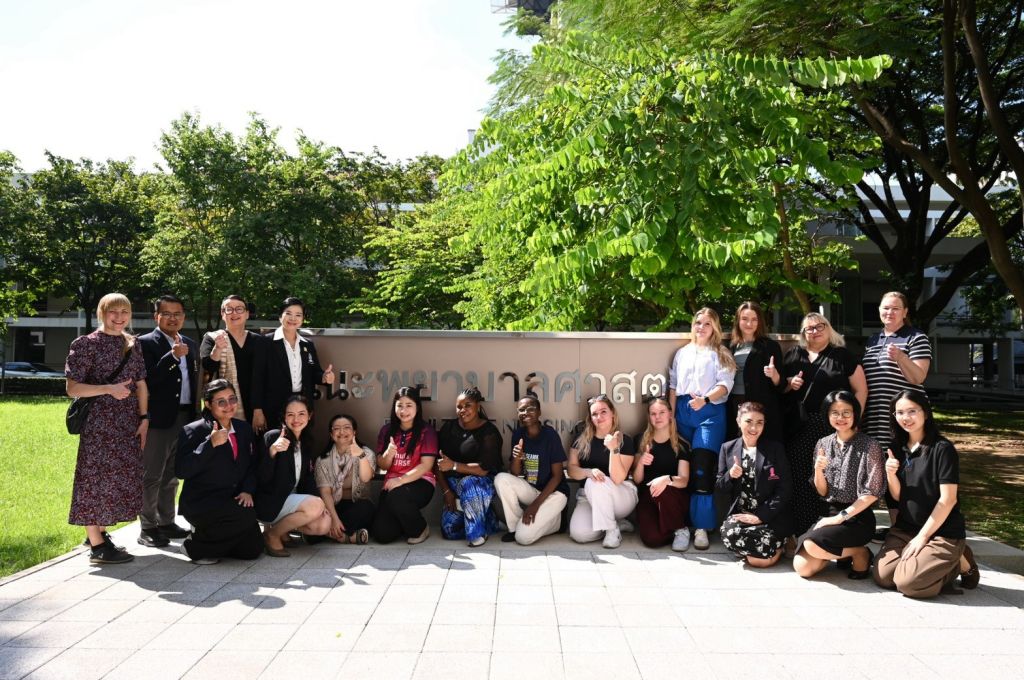
These themes were explored during the DEqual – Equality in Diabetes Care intensive week in Bangkok, Thailand, which brought together students and staff from Seinäjoki University of Applied Sciences (SEAMK), Tampere University of Applied Sciences (TAMK) and Chulalongkorn University. The experiences raised a broader question: what opportunities does a person have to take care of their health when the environment, access to information and possibilities to make health-related choices are restricted? At the same time, the visits challenged the idea that correctional health should be viewed only through restrictions and problems.
Equitable care recognises different circumstances
Equal access to healthcare does not necessarily result in equal health outcomes. According to the State of inequality: noncommunicable diseases and their risk factors, inequalities in noncommunicable diseases, including diabetes, are associated with factors such as economic status, education and place of residence and can also be observed in access to prevention and treatment services (WHO, 2026).
This perspective is particularly relevant in correctional settings, where choices related to food, physical activity, medication, glucose monitoring and professional support may be influenced by institutional routines. The WHO Prison Health Framework similarly promotes equivalence of care for people living in prison (WHO, 2023). During the intensive week, this became more than an abstract principle. One reflection emphasised that good nursing care should extend beyond hospitals and conventional healthcare settings. Regardless of the environment, care should recognise the individual behind the diagnosis and be based on dignity, respect and compassion.
Diabetes self-management behind prison walls: restrictions and opportunities
Research from Thailand illustrates the challenges involved. Thato et al. studied 60 incarcerated people with, or at risk of, diabetes and hypertension in six Thai prisons. Resource constraints, inequalities in screening and limited clinical monitoring were identified, while self-reliance also emerged as an important theme (Thato et al., 2026). These findings highlight why diabetes education needs to reflect the circumstances in which self-management actually takes place. Knowing what should be done is not enough if the environment makes the recommended behaviour difficult to achieve.
However, one of the reflections from Bangkok raised another perspective. For some individuals, life inside prison might provide more structure and support for health than their previous circumstances outside. Access to healthcare, controlled nutrition, physical activity and therapy were among the positive aspects observed during the visit. This does not mean that imprisonment itself improves health. However, the observation has parallels in Finnish research. The Health and Wellbeing of Prisoners 2023: The Wattu IV Prison Population Study Finland describes imprisonment as an opportunity to identify previously untreated illnesses, mental health needs and social problems. Identifying these needs during imprisonment may also support continuity of treatment after release (Rautanen et al., 2024). The relationship between imprisonment and health is therefore not straightforward. Correctional environments restrict some health-related choices but may also provide opportunities for screening, treatment and structured health promotion.
Thailand provides interesting examples of how such opportunities can be strengthened. Prison Health Volunteers enable trained incarcerated people to participate in health promotion among their peers. Recent research has examined this approach specifically in diabetes and hypertension care. Prison Health Volunteers were trained to support self-care, health-promoting behaviours and prevention of complications (Thongkhram & Piyabanditkul, 2026). Another Thai programme addressed physical, mental, social and environmental dimensions of health among Prison Public Health Volunteer Leaders and reported improvements in knowledge, attitudes, health-practice skills and overall capacity (Tanthanapanyakorn et al., 2026). These examples illustrate how a correctional setting can become not only a place where healthcare is delivered but also an environment for participation, peer support and health promotion.
Health literacy and mental wellbeing matter
Diabetes self-management also depends on health literacy: the ability to access, understand, appraise and use health information and services. Health literacy is not solely an individual responsibility; organisational structures and available resources also shape people’s opportunities to use health information (WHO, 2025). This is particularly relevant in correctional settings, where people may need to be actively equipped and enabled to take a more active role in managing their health (Hwang et al., 2025). This shifts the question from “Does this person understand diabetes?” to “How easy have we made it for this person to understand and manage diabetes?”.
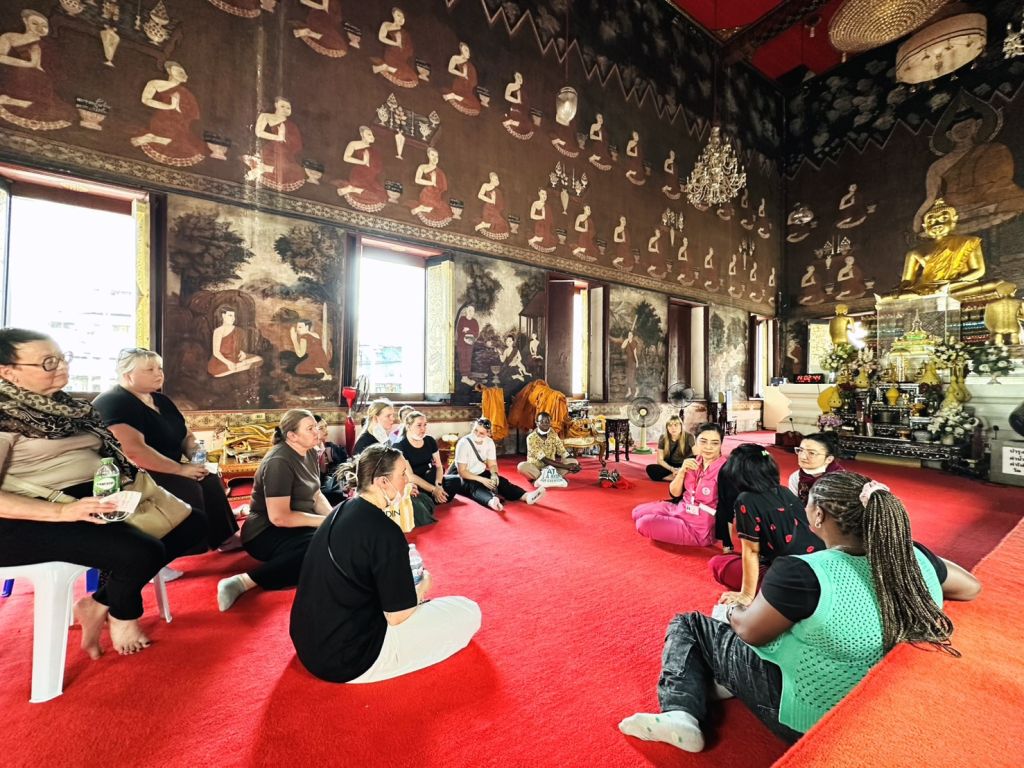
Mental health also emerged during the prison visit. Health volunteers identified insomnia, anxiety and hallucinations, possibly related in some cases to withdrawal, among the concerns encountered. The same broader health burden can be seen in Finland. Rautanen et al. identified substantial health and social care needs among incarcerated people, including chronic illnesses, mental health symptoms, loneliness and substance-use-related disorders (Rautanen et al., 2024). The relationship between diabetes and mental wellbeing also requires attention. A qualitative study involving people with type 1 diabetes highlighted the importance of bridging the gap between physical and mental healthcare. Participants’ experiences included themes related to support networks, stigma and shame, and the intrusiveness of diabetes management in everyday life (Ferrier et al., 2021).
Seeing the person behind the diagnosis
The experiences in Bangkok highlighted that equitable diabetes care is about more than medication or providing everyone with the same information. Health is influenced by the environment in which people live, the information they can understand and use, their mental and social wellbeing, and their opportunities to participate in their own care.
For healthcare professionals, this means looking beyond what a person should do to manage diabetes. An equally important question is whether the person has a realistic opportunity to do it. Equitable diabetes care therefore requires understandable information, appropriate support and healthcare systems that recognise the circumstances in which self-management takes place. Ultimately, equality in diabetes care is not simply about providing the same care to everyone. It is about creating genuine opportunities for people to understand their condition, participate in their care and manage their health within the circumstances in which they live.
This article was prepared as part of the DEqual – Equality in Diabetes Care project, funded by Team Finland Knowledge (TFK). We gratefully acknowledge the funding supporting the project, international collaboration and student participation in the intensive week in Bangkok.
Beatrice Suomalainen
Nursing student
SEAMK
Dilrubai Siltamäki-Toclucu
Nursing student
SEAMK
Sarah Ekwiekwie
Nursing student
SEAMK
Pauliina Oja-Lipasti
Senior lecturer, project manager
SEAMK
Beatrice Suomalainen, Dilrubai Siltamäki-Toclucu and Sarah Ekwiekwie are nursing students at Seinäjoki University of Applied Sciences. They participated in the DEqual project and its international intensive week in Bangkok, contributing student perspectives on international learning, cultural humility and nursing education.
Pauliina Oja-Lipasti is a Senior Lecturer and Project Manager in the DEqual project at Seinäjoki University of Applied Sciences.
Sources
Ferrier, L., Ski, C. F., O’Brien, C., Jenkins, Z., Thompson, D. R., Moore, G., Ward, G., & Castle, D. J. (2021). Bridging the gap between diabetes care and mental health: Perspectives of the Mental health IN DiabeteS Optimal Health Program (MINDS OHP). BMC endocrine disorders, 21(1), 96-8. https://doi.org/10.1186/s12902-021-00760-3
Hwang, Y. I. J., Hagos, A. K., Harris-Roxas, B., Withall, A. L., Butler, T. G., Hampton, S., Cheng, C. & Elmer, S., (2025). “Equipping and enabling” health literacy during a “time of change”: Understanding health literacy and organisational health literacy responsiveness for people leaving prison in later life. Health & justice, 13(1), 21-16. https://doi.org/10.1186/s40352-025-00328-6
Rautanen, M., Harald, K., & Tyni, S. (2024). Health and Wellbeing of Prisoners 2023. The Wattu IV Prison Population Study Finland. Finnish Institute for Health and Welfare. https://www.julkari.fi/server/api/core/bitstreams/6fd55490-ac00-430d-916a-5f2119b0a379/content
Tanthanapanyakorn, P., Chanmalee, S., Mungkhunthod, S., Praserttai, C., & Khantikulanon, N. (2026). Evaluation of the holistic health care program to develop the capacity of prison public health volunteer leaders (PPHVs) in Thailand: A participatory action research. Belitung nursing journal, 12(3), 382-393. https://doi.org/10.33546/bnj.4580
Thato, R., Jittimanee, S., Rungsawasd, N., Leerat, W., Jaikham, H., Etae, R., Prommart, C., Tantivisan, K., & Uthis, P. (2026). Systematic hypertension screening and follow-up attrition in Thai prisons: A cross-sectional study. The journal of medicine access, 10, 27550834261418845. https://doi.org/10.1177/27550834261418845
Thongkhram, S. & Piyabanditkul, L. (2026). Effectiveness of the Training Program for Prison Health Volunteers in Caring for Prisoners with Diabetes and Hypertension. Journal of Thailand Nursing and Midwifery Council, 41(1). DOI: 10.60099/jtnmc.v41i01.276924
World Health Organization. (2025). Health literacy. Retrieved 12.11.2026 from https://www.who.int/news-room/fact-sheets/detail/health-literacy
World Health Organization. (2026). State of inequality: noncommunicable diseases and their risk factors. World Health Organization. https://iris.who.int/handle/10665/387656
World Health Organization. (2023). The WHO prison health framework a framework for assessment of prison health system performance. World Health Organization. https://iris.who.int/server/api/core/bitstreams/8a4f56b3-c9bd-48d7-929d-df5a21a61dd9/content