Participation in the EHEDG World Congress 2026 in Vienna

Ensuring Food Safety and Optimising Hygienic Production
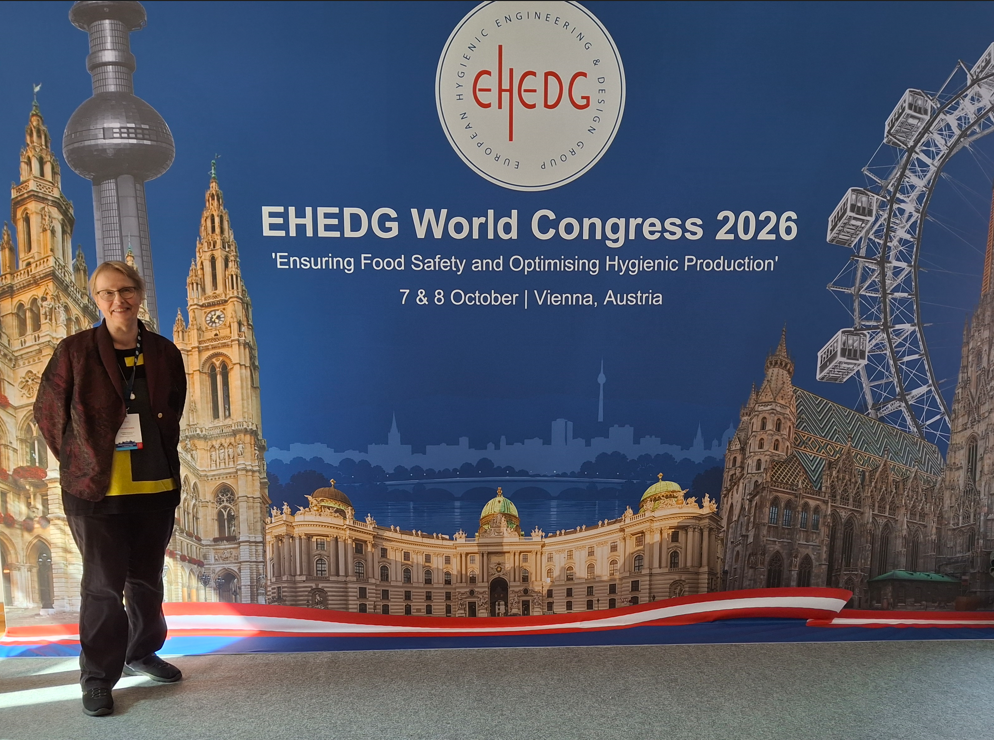
The European Hygienic Engineering and Design Group (EHEDG) World Congress 2026 “Ensuring Food Safety and Optimising Hygienic Production” was held in Vienna on October 7-8, 2026. SEAMK has been invited to participate in EHEDG as a university member. Before the congress, on 6th of October, 2026 the EHEDG office members arranged a plenary meeting. Both events were held in Vienna, Austria. Gun Wirtanen (Figure 1) participated in this hygienic design congress amongst more than 450 professionals working with food safety issues, i.e., improving the safety of food production.
Besides food producers and equipment manufacturers there were also researchers, trainers and authority personnel, who deal with food safety, food quality, hygienic design of equipment and facilities, in the audience. In total 41 topics were dealt with at this congress. In the main sessions, there were 13 presentations and two round table discussions. In the breakout sessions, there were in total 26 presentations.
Cooperation between EHEDG and EFFoST – The EYE mentorship programme
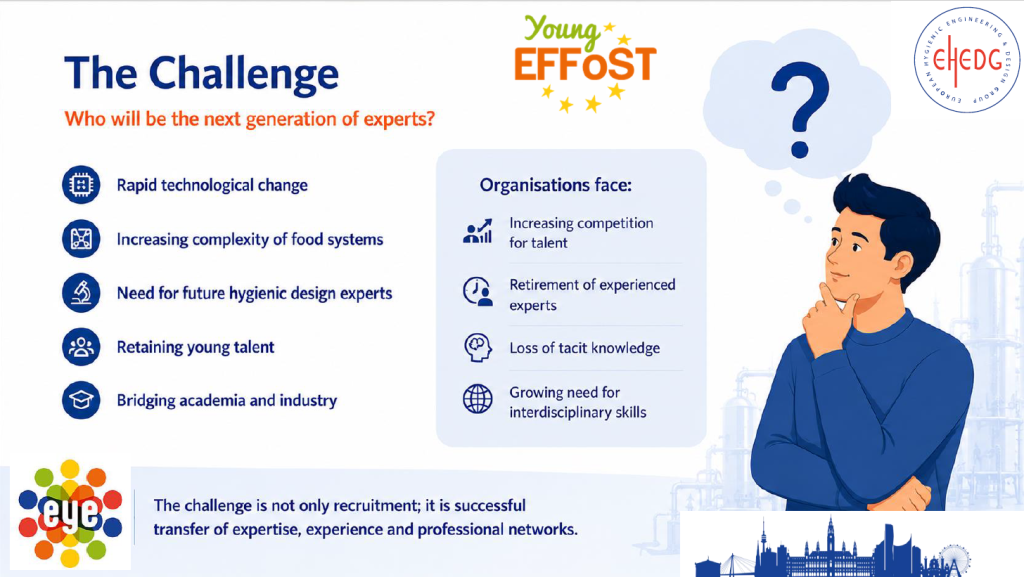
One of the topics dealt with was cooperation between experts from EHEDG and students of the Young EFFoST group. This topic is shown in more detail in Figure 2. The challenges of the mentor- mentee programme of both organisations are successful transfer of expertise and bridging experienced experts with young professionals through networking. The EYE (EHEDG & Young EFFoST) programme pairs young professionals with people who are experienced in food science and technology. This pathway enable young students to connect with experts in the EHEDG network. The aim of this is that they gain valuable information on hygienic design and food safety, which the students can use when they develop their skills.
The programme at the congress
On the first congress day, there were plenary speeches on how to prioritise spending and investment in equipment, impact on creativity and design as well as EHEDG guideline (GL) 8 on that hygienic design is a decision, not a detail. Thereafter a round table discussion was held. It dealt with the role auditing can play in verifying the effectiveness of hygienic design as a HACCP prerequisite program. Amongst the presentations after this round table discussion Adam Ruskin from Ecolab elaborated on making hygienic design happen in the food factory.
On the second day the audience listened to speeches on productivity, innovative flushing approaches and connected assets on business outcomes before the participants had to choose between presentations given in the outbreak sessions. Firstly, choices had to be made between hygienic design for dry materials, solutions in CIP cleaning and a session on hygienic design of equipment used in processing of liquids. Secondly, there were sessions on professional growth in hygienic engineering (see Figure 2), thermal processing, and equipment in food packaging.
After the breakout sessions there was a round table on sustainability and furthermore, a presentation on foreign bodies before the congress was closed through a presentation on “Why do we dare to take the next bite? Food, safety and the strange act of putting the outside world inside our bodies”.
Presentations on “Managing of building work and equipment installations” as well as infrastructures in hygienic chocolate production
The new guideline (GL) 44 will be published in several parts. Part 2 of GL44 deals with Managing of building work and equipment installation/removal during food production. It was published in autumn 2025. This presentation was given by Gun Wirtanen. Furthermore, on the second day Gun also took part in the presentation of the guideline on hygienic design in Chocolate production being prepared.
The parts of the guideline GL44 describes how to design, evaluate, and maintain hygienic envelopes. Essentials are seamless, durable, easy‑to‑clean floors with integrated drainage and correct falls. Furthermore, hygienically detailed joints and interfaces and robust, watertight roofs protecting inside production activities from the outside are included in these documents.
Gun Wirtanen
DTech, Senior Advisor in Food Safety
ORCID 0000-0002-5134-647X
SEAMK
The author of this article, Gun Wirtanen is a member of the Food Technology and Food Safety RDI team at SEAMK. Her expertise is in food hygiene and hygienic design.
References
EHEDG. (2025). Managing building work and equipment installation/removal during food production. European Hygienic Engineering & Design Group. Retrieved October 14, 2026, https://www.ehedg.org/guidelines-working-groups/guidelines/ guidelines/detail/guidelines/ guidelines/detail/managing-building-work-and-equipment-installationremoval-during-food-production.
EHEDG. (2026). EHEDG World Congress 2026 ‘Ensuring Food Safety and Optimising Hygienic Production’ 7 & 8 October 2026 Vienna, Austria. European Hygienic Engineering & Design Group. Retrieved October 14, 2026, https://www.ehedg.org/congress-2026/.
EHEDG & Young EFFoST. (n.d.). EYE The EYE (EHEDG & Young EFFoST) Mentorship Programme. European Hygienic Engineering & Design Group. Retrieved October 14, 2026, from https://www.ehedg.org/training-education/mentorship-opportunities/eye-mentorship-programme.