
Beyond the walls - diabetes care and nursing education in Finland and Thailand

Managing diabetes requires access to medication, suitable food, glucose monitoring and professional support. In prison, institutional routines and security arrangements influence how these needs can be met. Preparing nurses for this environment requires teaching that reflects the conditions in which care takes place.
These questions brought staff and students from Seinäjoki University of Applied Sciences (SEAMK), Tampere University of Applied Sciences (TAMK) and Chulalongkorn University together in Bangkok on 2–6 November 2026. Hosted by Chulalongkorn University’s Faculty of Nursing, the intensive week formed part of DEqual – Equality in Diabetes Care, funded by Team Finland Knowledge and coordinated by SEAMK.
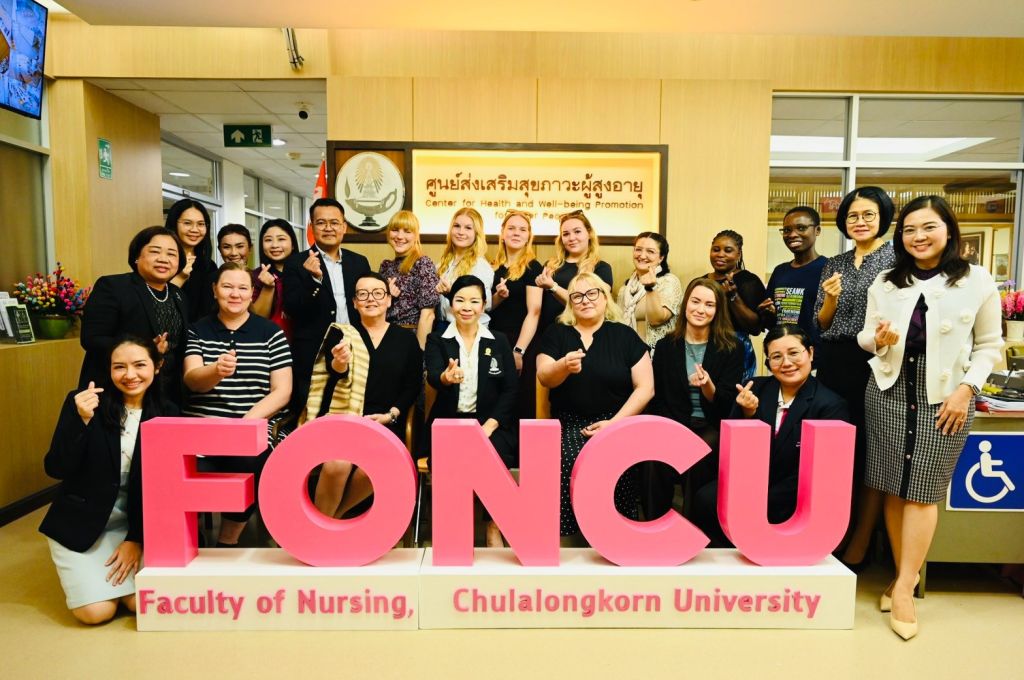
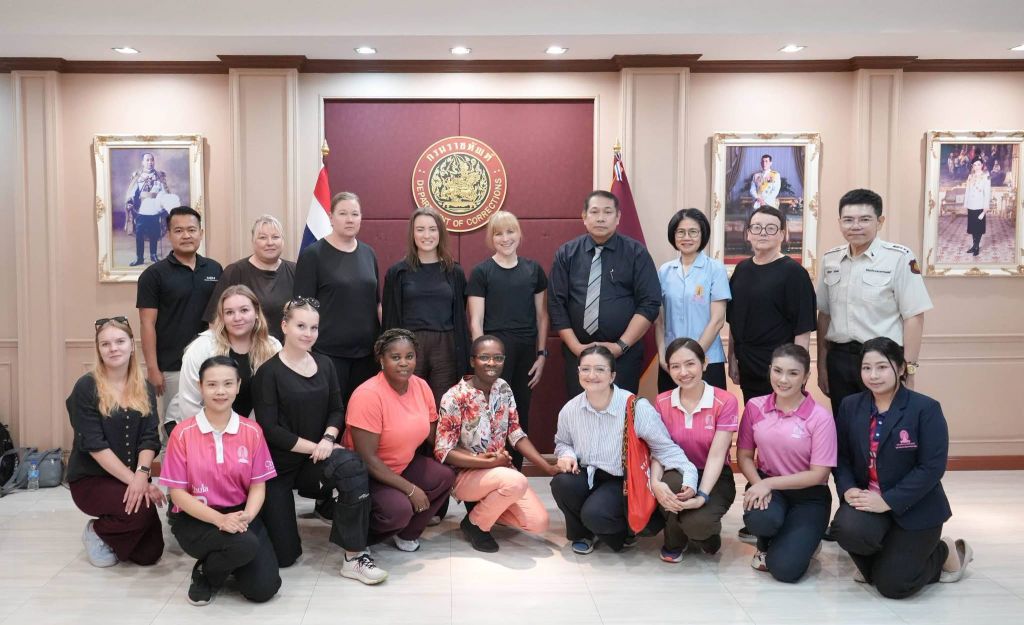
Participants reviewed a training curriculum for prison nurses, discussed diabetes health literacy and learned about Thailand’s healthcare system. Discussions with the Department of Corrections and visits to a correctional institution for drug offenders and Wat Duang Kae Community connected educational development with healthcare in correctional facilities and low-income communities.
Adapting nursing education to prison conditions
The Thai training curriculum offered a concrete starting point for the exchange. Developed through cooperation between Chulalongkorn University’s Faculty of Nursing, the Department of Corrections and the Department of Disease Control, it addresses diabetes and hypertension prevention and management in prisons.
A needs analysis in six Thai prisons found that two lacked specific nursing guidelines for these conditions, while four used general-population guidelines that did not adequately reflect prison conditions. The resulting curriculum covers screening, health behaviour modification, emergency care, disease control and awareness raising. It draws on the RE-AIM framework: reach, effectiveness, adoption, implementation and maintenance (Faculty of Nursing, Chulalongkorn University, n.d.).
During the intensive week, participants reviewed the curriculum and presented recommendations for improvement. Discussions also addressed how incarcerated people can understand and use diabetes information within their everyday circumstances.
The teaching materials provide practical examples. Actual prison menus can support discussions about food choices, while physical activity needs to reflect the space available. Prison television, public address systems, group education and visual materials offer possible channels for health communication. These approaches connect clinical advice with the choices and resources available to patients.
Finland and continuity of care
In Finland, Health Care Services for Prisoners (VTH) operates under the Finnish Institute for Health and Welfare (THL). It provides most primary healthcare, oral healthcare and psychiatric specialist services itself, while obtaining other specialist and emergency services externally. Its principle is to provide services corresponding to public healthcare, taking prison conditions into account (Health Care Services for Prisoners, n.d.).
Finland’s Wattu IV prison population study examines physical health, mental health, substance use and social circumstances. It also highlights the importance of continuity of care and service pathways after release (Rautanen et al., 2024).
For diabetes education, these findings support teaching that considers patients’ other health needs and social circumstances. Nurses need to communicate information in understandable ways and help connect care during imprisonment with services after release. This is an educational implication of the wider evidence on prisoners’ health, rather than a diabetes-specific finding of the study.
Thailand and the organisation of prison healthcare
During the visit to the Department of Corrections, representatives explained that national policy seeks to provide prisoners with healthcare comparable to that available to the general population. Contracted hospitals support the management of non-communicable diseases, and prisoner volunteers assist with blood glucose monitoring.
Staffing and professional development were recurring concerns. The Department reported a national standard of one nurse per 700 prisoners, compared with approximately one per 900 in practice. It also identified a need to strengthen nurses’ competence in responding to accidents, mental health needs and the care of older prisoners.
Published research adds the perspective of incarcerated people. A qualitative study published in 2025, using data collected in six prisons in 2023, described difficulties with dietary provision, screening, clinical monitoring and access to support (Thato et al., 2025). These findings concern the participating facilities during the study period.
A separate hypertension study illustrates cooperation between trained prisoner volunteers, nurses and hospitals. Among 11,290 eligible individuals in five prisons, 98.6% agreed to screening. However, the study reported 6.7% loss to follow-up during the screening and diagnostic process (Thato et al., 2026). For nursing education, this highlights the importance of supervision, documentation and referral: screening must connect with completed assessment and appropriate care.
Developing teaching methods and access to professional learning
The Bangkok discussions identified practical priorities for educational cooperation. Nurses need opportunities to practise explaining diabetes care in understandable language, coordinating treatment with institutional routines and recognising situations requiring urgent professional assessment.
Simulation was a particular area of interest. Chulalongkorn University’s Faculty of Nursing is developing simulation facilities for its planned undergraduate nursing programme. Discussions highlighted the need to complement equipment with staff competence in scenario design, facilitation and structured debriefing. Future cooperation could include scenarios concerning diabetes care for older people and patients in correctional facilities or low-income communities.
Access to continuing education also requires attention. Online learning was identified as the preferred training mode for prison nurses, whose opportunities to study during working hours are limited. Flexible delivery needs to be accompanied by realistic arrangements for participation and support.
Patient education requires different delivery choices. Prisoners’ restrictions on personal mobile phones mean that university learning platforms and mobile applications cannot automatically be transferred to correctional settings. Health literacy is therefore closely connected to the conditions in which diabetes self-care takes place: information is only useful if patients can access, understand and apply it within the possibilities and restrictions of their environment. Materials must use channels that patients are permitted and able to access.
Continuing cooperation beyond the intensive week
Thailand’s Village Health Volunteer model broadened the discussion beyond correctional healthcare. Volunteers support health education, home visits, screening and communication with professional services (Jittimanee, 2026). Their work prompted interest in how nurses could be prepared to train and supervise volunteers supporting people living with diabetes.
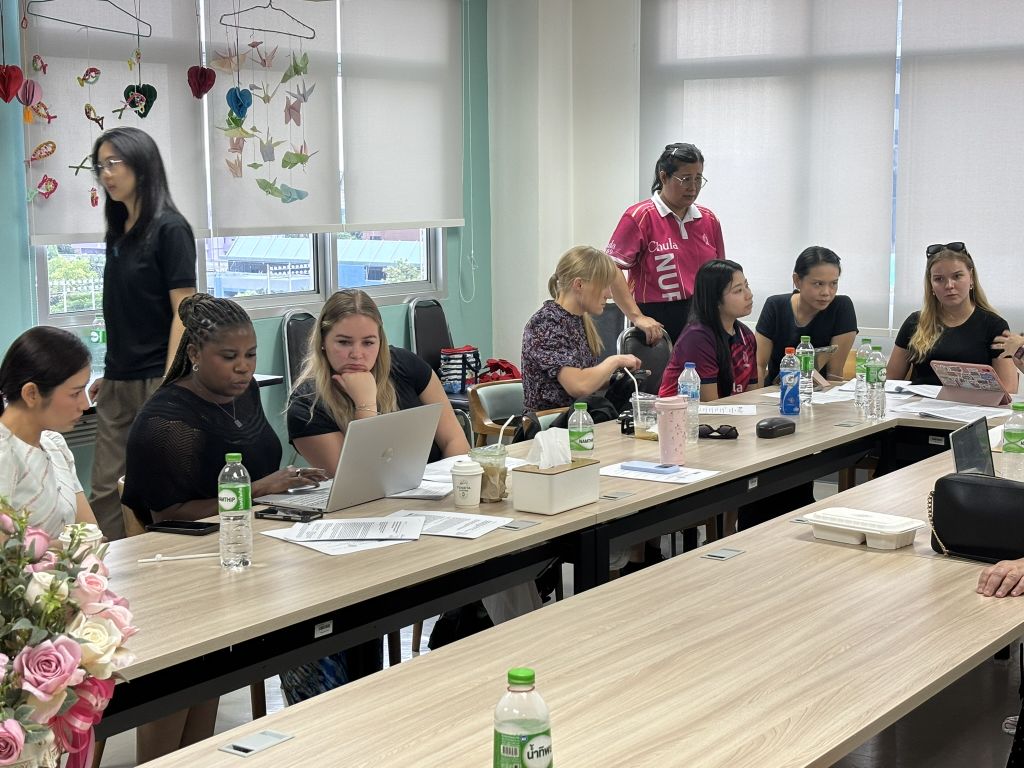
Partners discussed broader diabetes education for current and future nurses, with specialised content for prisons, low-income communities and training volunteers. Simulation pedagogy and accessible digital learning were identified as areas for further development.
For SEAMK and its partners, these discussions provide practical directions for cooperation: developing teaching materials, strengthening educators’ skills and adapting learning activities to local healthcare conditions. The next step is to turn these shared insights into practical teaching materials, simulation scenarios and learning opportunities that prepare nurses to provide equitable care of NCDs, both within and beyond prison walls.
Anne-Maria Mäkelä, Pauliina Oja-Lipasti, Marjut Asunmaa
SEAMK
References
Faculty of Nursing, Chulalongkorn University. (n.d.). Training courses for nurses regarding the prevention and control of diabetes and hypertension in prison. Health Systems Research Institute-funded material.
Health Care Services for Prisoners. (n.d.). Health care services for prisoners. https://vth.fi/en/
Jittimanee, S. (2.11.2026). Healthcare systems in Thailand [Presentation slides]. DEqual intensive week, Chulalongkorn University, Bangkok.
Rautanen, M., Harald, K., & Tyni, S. (Eds.). (2024). Health and wellbeing of prisoners 2023: The Wattu IV prison population study Finland (Report 3/2024). Finnish Institute for Health and Welfare. https://urn.fi/URN:ISBN:978-952-408-297-6
Thato, R., Jittimanee, S., Charuenporn, C., Hanbunjerd, K., & Uthis, P. (2025). Enduring inequality in diabetes and hypertension management in Thai prisons: A qualitative study. Journal of Patient Experience, 12, Article 23743735251361778. https://doi.org/10.1177/23743735251361778
Thato, R., Jittimanee, S., Rungsawasd, N., Leerat, W., Jaikham, H., Etae, R., Prommart, C., Tantivisan, K., & Uthis, P. (2026). Systematic hypertension screening and follow-up attrition in Thai prisons: A cross-sectional study. The Journal of Medicine Access, 10, Article 27550834261418845. https://doi.org/10.1177/27550834261418845